The story of coal mining in South Limburg is one of transformation, resilience, and regional identity. Between 1899 and 1927, the mining industry rapidly developed and reshaped the landscape—both physically and socially. What was once a relatively quiet region grew into an industrial powerhouse, attracting workers from across the Netherlands and beyond.
The very first modern coal mine in the region was the Domaniale Mijn, which officially began large-scale production at the end of the 19th century. Its success marked the beginning of a new era. In the decades that followed, more mines opened, including the Oranje Nassau mines and the State Mines, turning South Limburg into the heart of the Dutch coal industry.
This expansion created tens of thousands of jobs. At its peak, the mining sector provided employment for over 75,000 people, directly and indirectly. Entire communities were built around the mines, and generations of families depended on them for their livelihoods. The mines didn’t just bring work—they brought cultural diversity, innovation, and a strong sense of solidarity that still defines the region today.
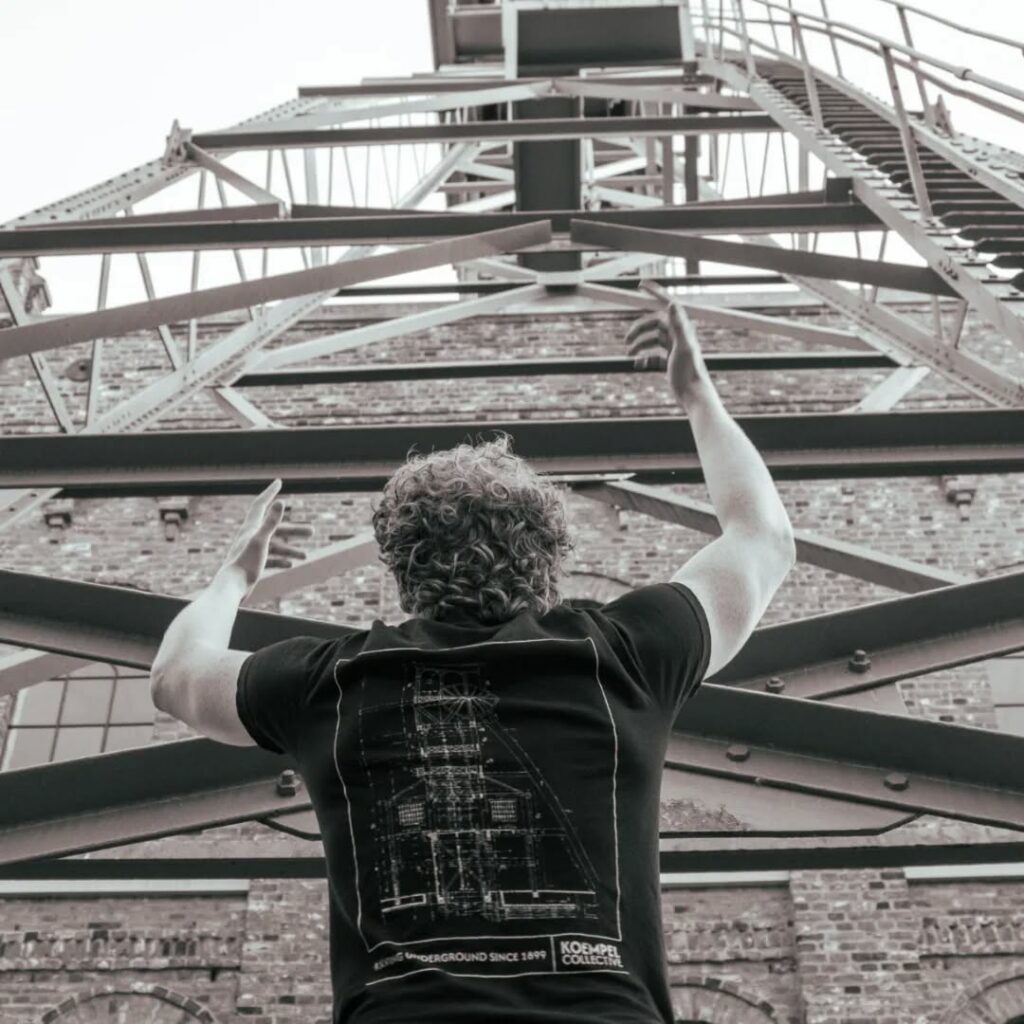
One of the later additions to this mining era was the Oranje Nassau IV, which holds a special place in local history. As one of the final mines to open before the industry reached its peak, it symbolizes both the height of industrial ambition and the beginning of a changing future. For us, Oranje Nassau IV is more than history—it served as the inspiration for the design of our very first merchandise shirt, The Koempel Collective Mijnschacht Shirt. Connecting our creative identity directly to the roots of our region.
By remembering these mines and the people who worked in them, we honor a legacy that continues to influence South Limburg today. It’s a story of hard work, community, and pride—one that deserves to be shared with new generations.

Leave a Reply